Chest of Drawers
Attributed to John Dunlap (American, 1746–1792) and/or Samuel Dunlap (American, 1752–1830) · New Hampshire · 1780–1810
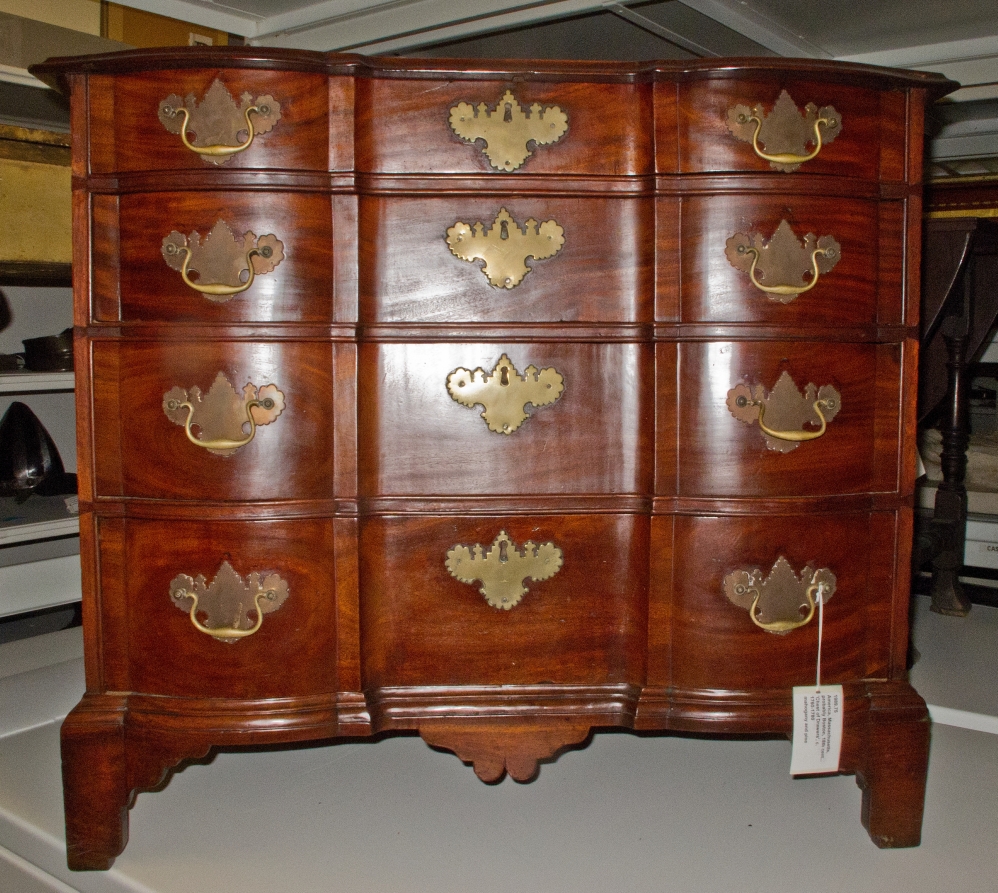
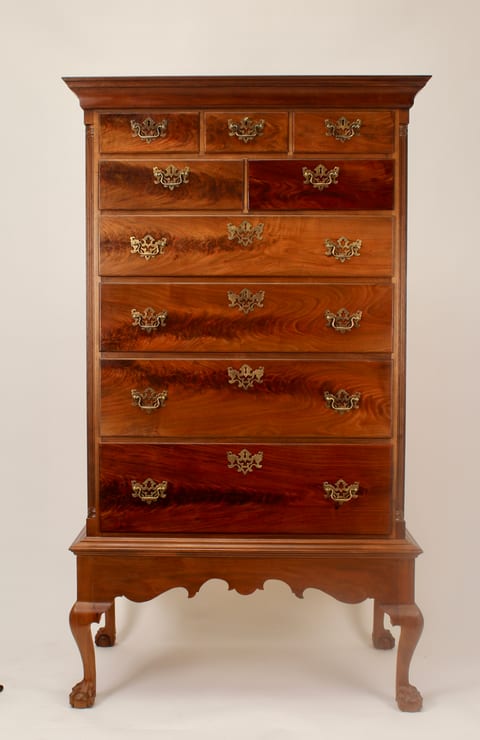
Working in a series of small towns in south-central New Hampshire, brothers John and Samuel Dunlap became two of the most important early cabinetmakers in the state. With a conservatism typical of rural areas, they and their patrons continued to favor Chippendale features in furniture design long after their urban contemporaries had turned to the new Federal mode. The Dunlaps combined these Chippendale elements with their own distinctive forms, developing an individual furniture style. Compared to more urban examples from Portsmouth or Boston, Dunlap pieces like this chest tend to be large, with sharply angled legs, slender ankles, and truncated ball-and-claw feet. This chest also features the Dunlaps' characteristic painted wood grain, which they used to create the illusion of more exotic wood, such as mahogany.