In the collection ofArt Institute of Chicago
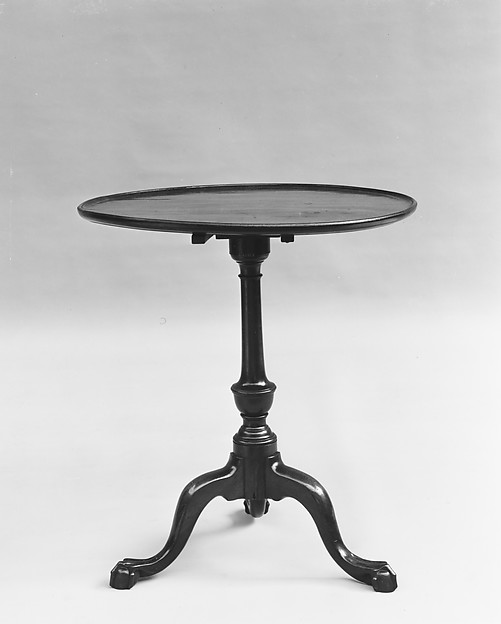
Tea Table, Artist unknown (American, 18th century), 1750–90, Mahogany
The photograph is served by Art Institute of Chicago and is not available from their site at the moment. See it on the museum's own record ↗
Zoom
Photograph © Art Institute of ChicagoFull record at the museum ↗
Table · Philadelphia

Tea Table

Artist unknown (American, 18th century) · Philadelphia · 1750–90

In the 18th century, Americans delighted in the genteel art of tea drinking, which facilitated socializing based on strict rules of engagement. First introduced to New York in the 1740s, the tilt-top tea table, designed in the service of fashionable domestic tea parties, was a popular form in colonial Philadelphia and New York. The spindled "birdcage" mechanism allowed rotation, which provided the hostess with a measure of gentility by enabling her to spin the table so that she did not have to reach for anything; the table also flipped into a vertical position, permitting efficient storage against a wall. Illustrating the understated Quaker aesthetic present in late-18th-century Philadelphia, this tilt-top tea table was likely used in the parlor or drawing room of a middle- to upper-middle-class home.

— Art Institute of Chicago, catalogue text
Medium
Mahogany
Dimensions
73.7 × 86.4 × 88.9 cm (29 × 34 5/8 × 35 in.)
Accession
2009.58
Credit line
Roger and J. Peter McCormick Endowment; purchased with funds provided by Jamee J. and Marshall Field, and Carol W. Wardlaw

The same form in other collections

The pieces nearest to this one across the eight museums — by form, region and date together, not by keyword.
Browse the collection →

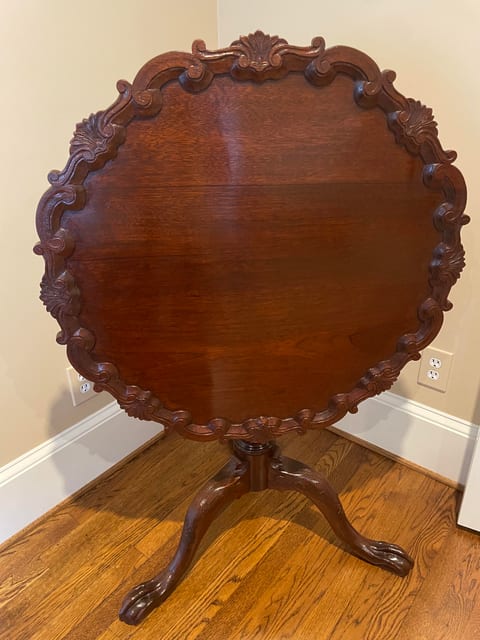
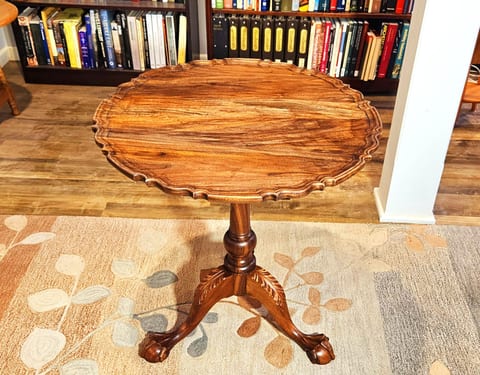
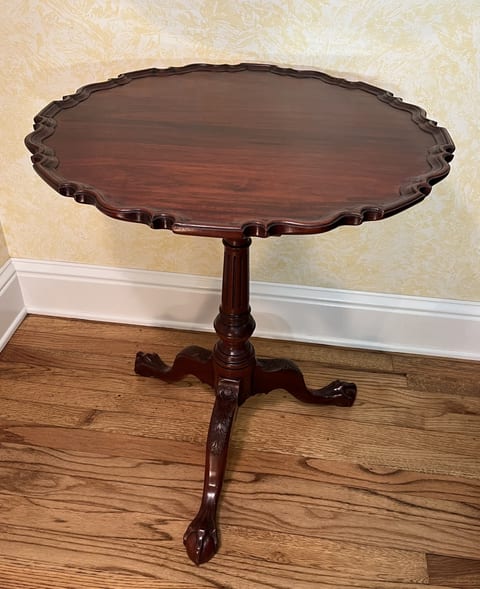
Members have built this form

From the Member Gallery — original work, photographed by the people who made it.
3 tea table builds in the gallery →