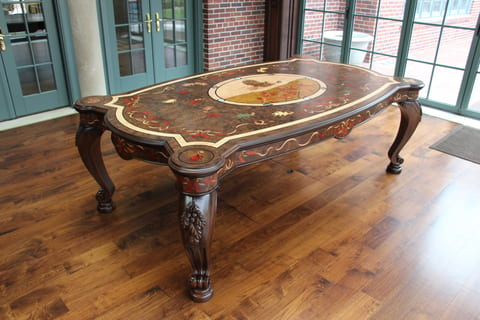
Table
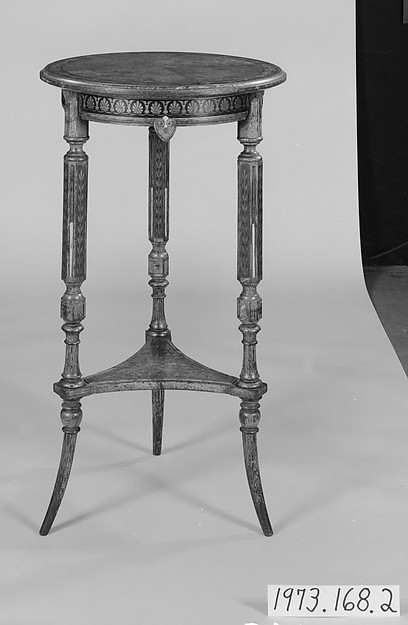
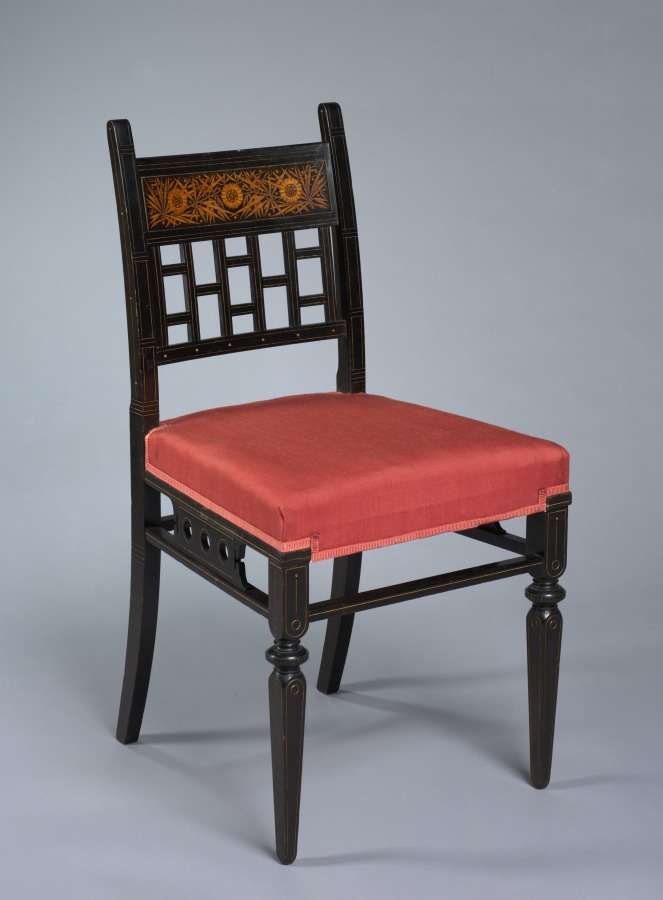
Herter Brothers · New York City · c. 1878
Herter Brothers was one of the leading firms that designed furniture and interiors for the American upper class during the Aesthetic movement. In the late 1870s, the firm began to experiment with Japanese-influenced elements in their designs, reflecting the great fascination with that country—known as Japanism—prevalent in American culture at the time. The ebonized surfaces of this table emulate Japanese lacquerware, while the floral ornamentation is drawn from Japanese lacquerware, paintings, prints, and textiles. However, the overall forms are Western and include elements derived from other cultures, such as the cabinet's (1986.26) Egyptian Revival paw feet. Aesthetic-movement designers such as Herter Brothers readily combined such eclectic motifs as long as they could still achieve a sense of visual harmony.