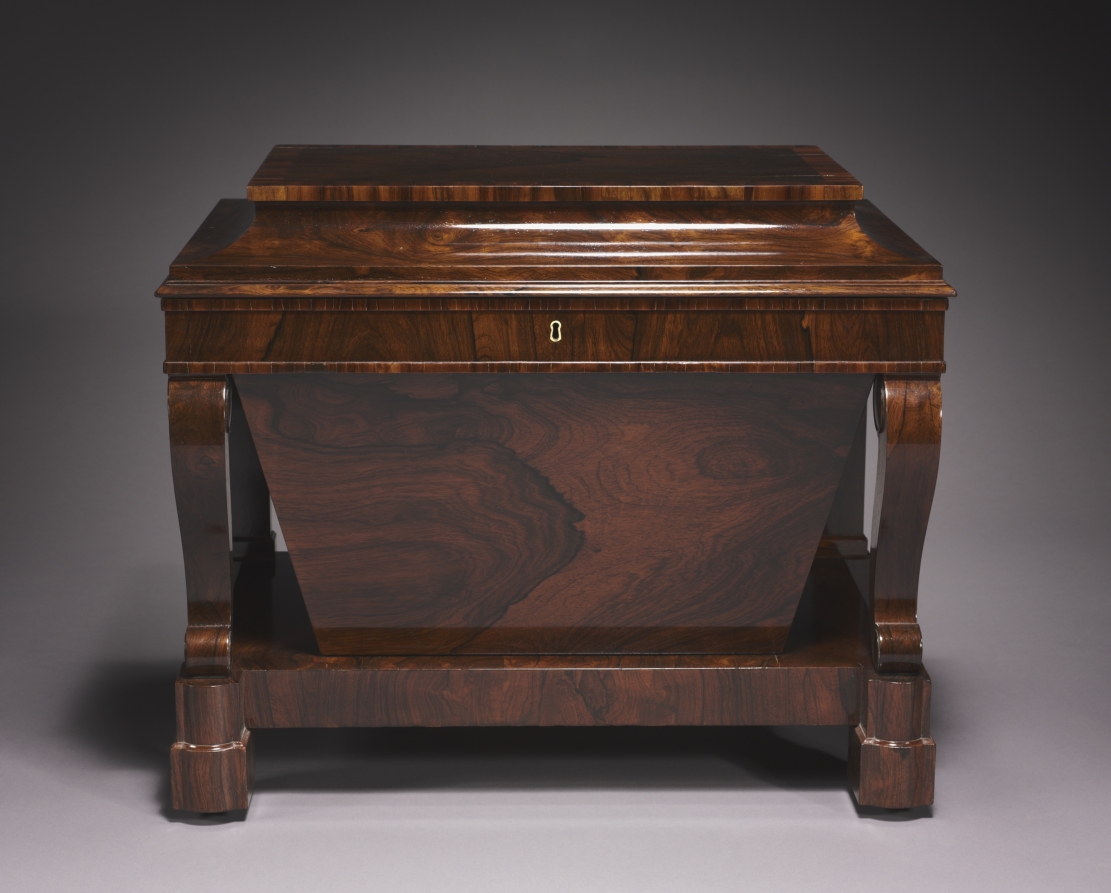
Cellarette
Duncan Phyfe and Son (American, 1768–1854) · America · c. 1840
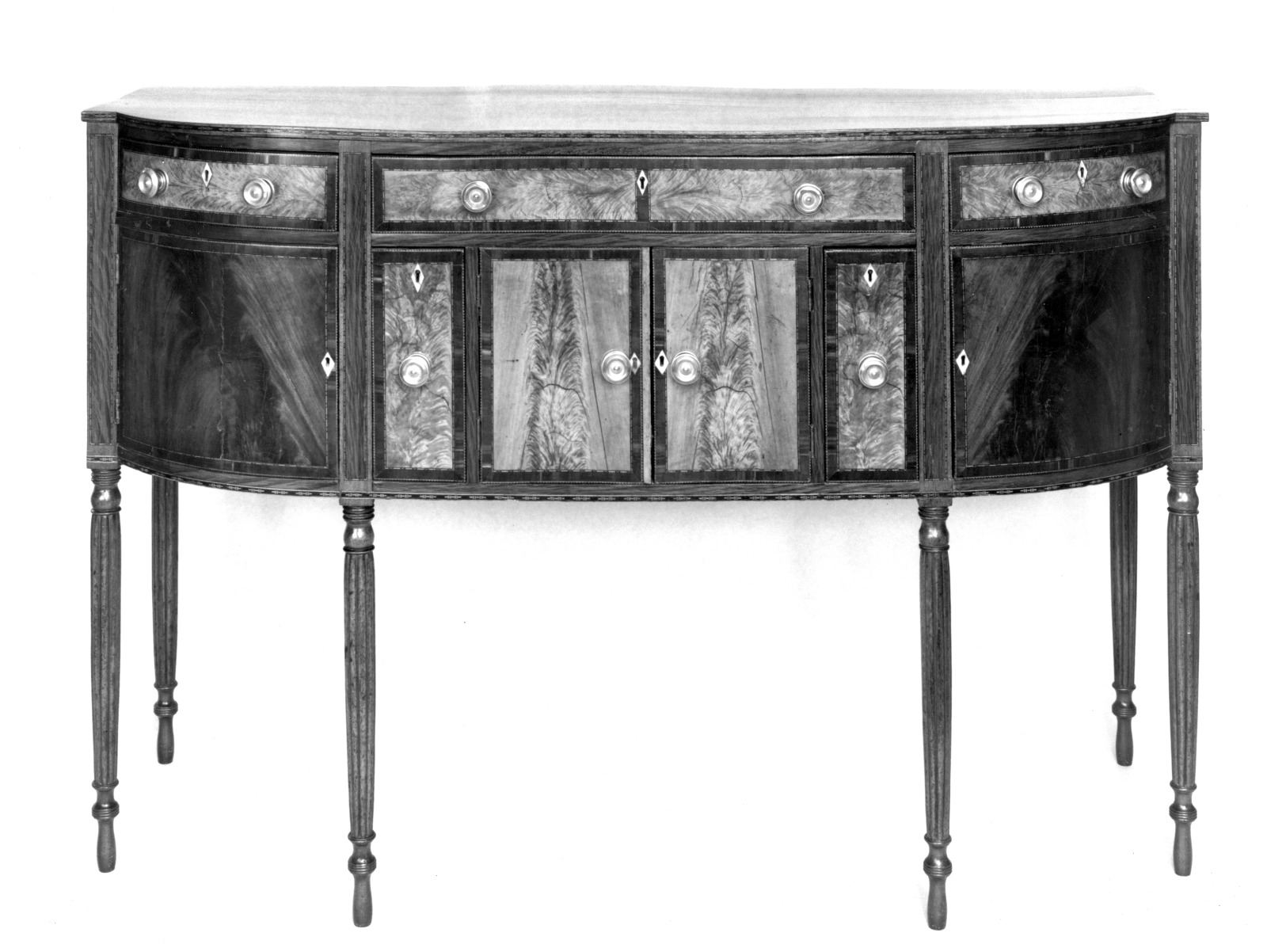
Easily the most famous American furniture maker, Duncan Phyfe (born Scotland, 1768-1854) gave his name to New York furniture that is similar to English Sheraton pieces of the early 19th century-characterized by simple designs, straight lines, thin legs, and classical ornamentation. Despite the fashionable success enjoyed by his work, Phyfe responded to stylistic changes, and by the 1830s had evolved a more severe mode that has been termed the "Grecian plain style." This sideboard and its cellarette (a cabinet for storing wine or liquor) are superb examples of that taste, relying for their effect on relatively simple structural forms with ornamentation largely limited to the use of boldly patterned rosewood veneers.