In the collection ofYale University Art Gallery

The photograph is served by Yale University Art Gallery and is not available from their site at the moment. See it on the museum's own record ↗
ZoomPhotograph © Yale University Art GalleryFull record at the museum ↗
Chair · Hudson Valley
Side Chair
Maker unknown · Hudson Valley · 1790–1830
With their spindle-turned legs and back posts and vase-shaped splats, chairs of this type were probably introduced at about the same time as the compass-seated walnut chairs of about 1730, but were a cheaper alternative. They were more economical to produce because they were turned on a lathe, made of maple, either stained or painted, and bottomed with rush. Shops in New Jersey, New York, Connecticut, and Rhode Island made chairs with the distinctive bat-shaped legs found on this example.
— Yale University Art Gallery, catalogue text
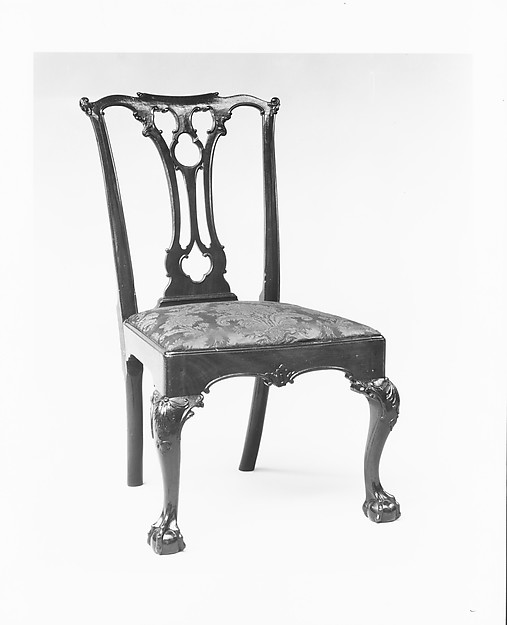
The same form in other collections
The pieces nearest to this one across the eight museums — by form, region and date together, not by keyword.


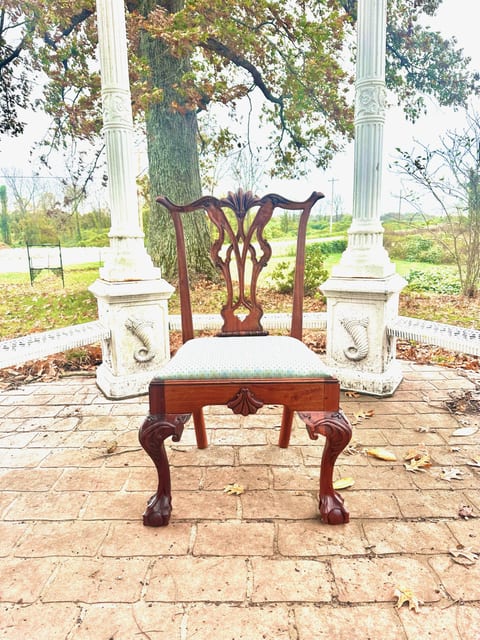
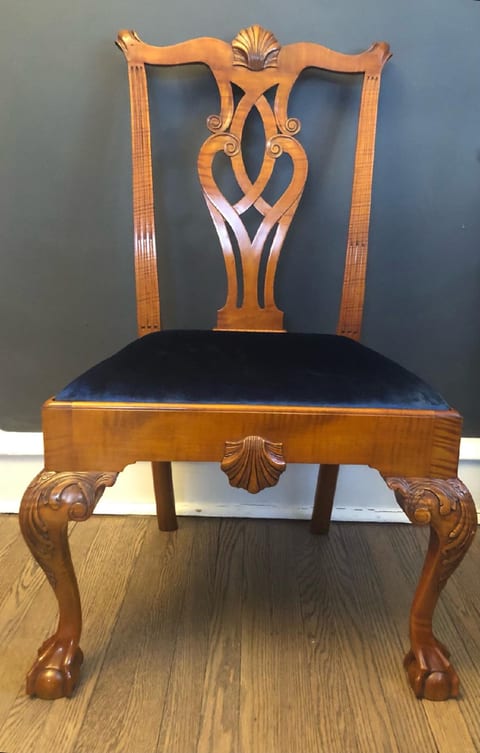
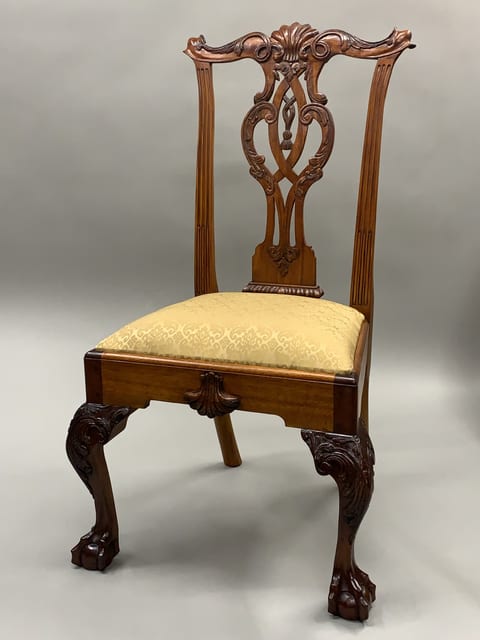
Members have built this form
From the Member Gallery — original work, photographed by the people who made it.