Continuous Bow-back Windsor Chair
Maker, attributed to: Jedediah Browning (American, 1767–1852) · Connecticut · 1790–1810
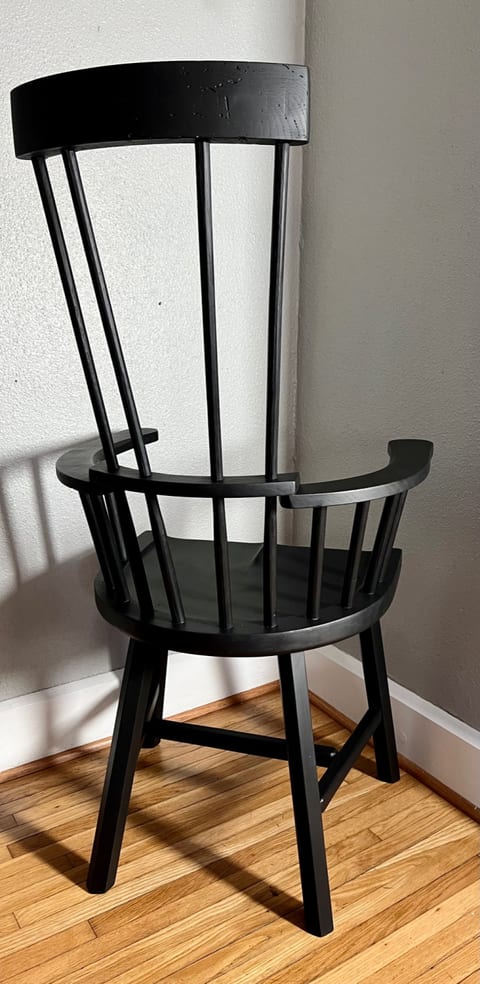
Windsor chairmaking originated in England and arrived in the colonies in the 1720s. With painted surfaces and wooden seats, which were sometimes upholstered, the chairs were a versatile form of seating furniture used in domestic, institutional, and landscape settings. There are many variations within Windsor chair design, but the continuous-bow back seen on this example—where a single piece of bent wood forms the arms and crest rail—appears to have been an American innovation. Continuous-bow armchairs were popularized in New York in the years surrounding the Revolution and spread into New England from there. This elegant chair descended in the family of cabinetmaker Jedediah Browning and was likely made by him. Born and trained in Rhode Island, Browning relocated to eastern Connecticut in the early 1800s. The crisp turnings on the legs, the attenuated spindles along the back, and the dramatic curve of the crest rail make for a particularly refined composition. The worn surface shows generations of paint, including a layer of brilliant crimson red beneath a coat of ebony black accented with gold.