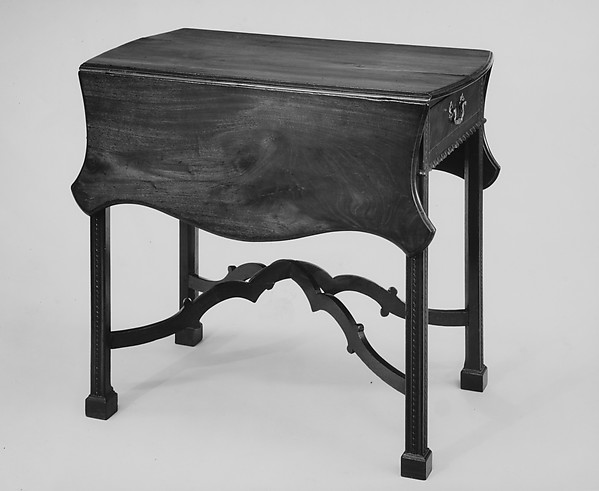
Pembroke Table
Artist unknown (American, 18th century) · Philadelphia · c. 1790
Named for the woman who first commissioned a table of this type in England around the mid-18th century, the Pembroke table was a popular form in American furniture from the late 18th century through 1840. While such tables were primarily used for breakfast dining, as a small, practical table, it could have been utilized for other activities as well, including gaming, reading, and writing. Four fixed legs, two drop leaves, and swing rails (to support the hinged leaves when open) generally characterize Pembroke tables. This fine early example was likely made in Philadelphia and is distinctive for its lively, flat arched stretchers, which echo the curves of the serpentine-shaped drop leaves.